EBOOK GIZI
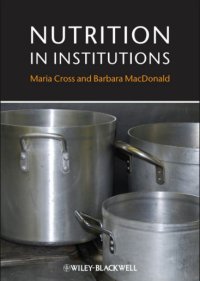
Nutrition in institutions
All people in all institutions have the right to good and adequate food, but so
far the service remains inequitable. In 2003 the media made much of a report
published by the Soil Association which claimed that more money was spent per
person on lunch in prisons than in schools (Soil Association, 2003). The result
was public outrage, but this outrage was misplaced, not least because adults have
greater dietary requirements than children. It is not so much wrong and outrageous that people in prisons should be adequately and humanely fed, but wrong and
outrageous that those in other institutions – especially hospitals and care homes –
are so often inadequately fed, and with so little humanity. The armed forces
were quick to understand the provision of food as being crucial to the smooth
running of the military machine and constitute the only institution to consistently
value the link between diet and health and performance. Others are catching up
fast, having previously been more focussed on the link between diet and fi nancial
gain. School food has recently been revolutionised and the Government should be
congratulated on the bold changes it has instigated. The Prison Service has also
made considerable and laudable progress in recent years in its efforts to improve
the provision of food across the prison estate. But it is clear that those who are
most vulnerable, and unable to stand up for themselves (quite literally), or riot on
rooftops, are those most likely to receive the poorest quality food service. The most
vulnerable have not so far found a campaigner to champion their cause, as Jamie
Oliver did for schools. If all institutions aspired to the standards set by the armed
forces, and applied the same level of organisation and commitment, the provision
of nutrition would be more universally commendable.
Ketersediaan
Tidak ada salinan data
Informasi Detail
- Judul Seri
-
-
- No. Panggil
-
363.8 CRO n
- Penerbit
- USA : John Wiley & Sons Inc.., 2009
- Deskripsi Fisik
-
-
- Bahasa
-
English
- ISBN/ISSN
-
978–1-4051–2125-5
- Klasifikasi
-
363.8 CRO n
- Tipe Isi
-
E-Book Online
- Tipe Media
-
Link Internet Online
- Tipe Pembawa
-
-
- Edisi
-
-
- Subjek
- Info Detail Spesifik
-
Maria Cross, Barbara Macdonald
- Pernyataan Tanggungjawab
-
Maria Cross, Barbara Macdonald
Versi lain/terkait
Tidak tersedia versi lain
Lampiran Berkas
Komentar
Anda harus masuk sebelum memberikan komentar
 Karya Umum
  Filsafat
  Agama
Agama  Ilmu-ilmu Sosial
  Bahasa
  Ilmu-ilmu Murni
  Ilmu-ilmu Terapan
  Kesenian, Hiburan, dan Olahraga
  Kesusastraan
  Geografi dan Sejarah