EBOOK GIZI
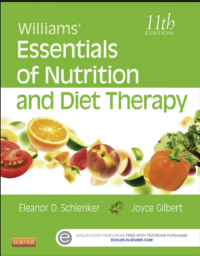
Williams’ Essentials of Nutrition and Diet Therapy
With the retirement of Dr. Sue Rodwell Williams, the founder
and primary author of the first eight editions of this text-
book, we continue to share responsibility for the prepara-
tion of this new edition. Part 1, Introduction to Human
Nutrition, provides the foundation in nutrition science, as
applied to human nutrition needs in Part 2, Community
Nutrition and the Life Cycle. Part 3, Introduction to Clinical
Nutrition, describes the nutrition care process for meeting
the nutritional needs associated with specific illnesses
and conditions and the application of medical nutrition
therapy. Our continuing contributors include Dr. Sharon
M. Nickols-Richardson, who prepared Chapter 11, “Nutrition
During Pregnancy and Lactation,” and Chapter 12, “Nutri-
tion for Normal Growth and Development.” Staci Nix, author
of Williams’ Basic Nutrition & Diet Therapy, contributed
Chapter 14, “Nutrition and Physical Fitness,” and Dr. Allan
Higginbotham revised Chapter 15, “The Complexity of
Obesity: Beyond Energy Balance.” We also welcome five
new contributors to this edition. Ritamarie Little prepared
Chapter 16, “Nutrition Assessment and Nutrition Therapy in
Patient Care,” and Pamela Charney, Chapter 19, “Nutrition
Support: Enteral and Parenteral Nutrition.” Dr. Dorothy
Chen-Maynard completed Chapter 20, “Gastrointestinal Dis-
eases,” Dr. Adriana Campa, Dr. Hatsu, and Dr. Baum contrib-
uted Chapter 24, “Acquired Immunodeficiency Syndrome
(AIDS);” and Dr. Beth Kunkel prepared Chapter 25 “Cancer.”
New material has been incorporated throughout this
edition, reflecting recent research findings and clinical treat-
ment therapies. Examples include new roles for traditional
nutrients such as vitamin D, updates on the transmission
and treatment of acquired immunodeficiemcy syndrome
(AIDS), and recent attention to the glycemic index with rep-
resentative food values. Health promotion with strategies for
implementation is a recurring theme throughout the text,
and students are encouraged to look for the Health Promotion
heading in each chapter for special information to assist with
nutrition education in a variety of settings. Full coverage of
the U.S. Department of Agriculture and U.S. Department of
Health and Human Services health initiatives including
MyPlate, the Dietary Guidelines for Americans, and Healthy
People 2020 includes goals, practice standards, and applica-
tion and usefulness to health promotion. Nutrient density is
given a new emphasis as a means to address current deficien-
cies within the U.S. population. We also provide an overview
of the newly proposed Nutrition Label. The chapters on
energy balance and obesity provide readers with a compre-
hensive review of this public health problem including
proposed contributing factors such as sleep deprivation.
Interventions to stem the advance of the obesity epidemic,
including new regulations for school breakfast and lunch that
limit kcalories and emphasize fruit, vegetables and whole
grains, and current activity recommendations for children
are presented. The chapter on nutrition and physical perfor-
mance includes emerging research pertaining to protein and
fluid needs, dietary supplements, and the benefits of exercise
on risk factors for cardiovascular disease and diabetes.
Chapter 10 as revised takes a public health approach to nutri-
tion and well-being, providing a framework for developing
and marketing community nutrition and health intervention
programs with attention to needs assessment, implementa-
tion, and evaluation.
Ketersediaan
Tidak ada salinan data
Informasi Detail
- Judul Seri
-
-
- No. Panggil
-
613.2 SCH w
- Penerbit
- Singapura : Elsivier Inc., 2015
- Deskripsi Fisik
-
-
- Bahasa
-
English
- ISBN/ISSN
-
978-0-323-18580-6
- Klasifikasi
-
613.2 SCH w
- Tipe Isi
-
E-Book Online
- Tipe Media
-
Link Internet Online
- Tipe Pembawa
-
-
- Edisi
-
-
- Subjek
- Info Detail Spesifik
-
-
- Pernyataan Tanggungjawab
-
Eleanor D. Schlenker, Joyce Gilbert
Versi lain/terkait
Tidak tersedia versi lain
Lampiran Berkas
Komentar
Anda harus masuk sebelum memberikan komentar
 Karya Umum
  Filsafat
  Agama
Agama  Ilmu-ilmu Sosial
  Bahasa
  Ilmu-ilmu Murni
  Ilmu-ilmu Terapan
  Kesenian, Hiburan, dan Olahraga
  Kesusastraan
  Geografi dan Sejarah