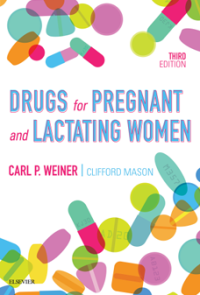
EBOOK FARMASI
Drugs for pregnant and lactating women
Frustrated by the absence of a comprehensive resource that recognizes the uniqueness of medical needs during pregnancy and lactation, we created Drugs for Pregnant and Lactating Women as an easy-to-use, reader friendly resource containing the key information required by caregivers to make prescribing decisions. Too often, we check only the FDA Pregnancy Category before making a decision to prescribe or discontinue a medication. Unfortunately, few of us have read these definitions (TABLE 1), understand their limitations, and realize the assigned category is essentially stagnant, based predominantly on information available when the drug was approved in the United States, and only occasionally officially updated to reflect advancing knowledge. Two-thirds of all drugs sold in the United States are classified Category C, and less than 1% are Category A. With the benefit of added experience, we learn that many Category X drugs are not absolutely contraindicated during pregnancy, and several Category C or D drugs are either clear human teratogens or have frequent and serious adverse fetal effects. These facts are highlighted by a study comparing the categorization of same drugs by the appropriate agencies in the United States, Australia, and Sweden (Addis A, Sharabi S, Bonati M. Drug Saf 2000; 23:245-53). Only 25% of the 236 drugs common to all three systems were placed into the same risk factor category. Nor does the categorization inform the provider how either pregnancy or lactation may alter the patient's response to therapy compared to the nonpregnant state. The FDA is well aware of these limitations and is actively considering revision. Lastly, increasingly busy health care providers are often dependent on either the advertisements in trade journals or the pharmaceutical house detail people for up-to-date information on new drugs. Yet, a recent study observed that promotional claims are frequently misleading, and the cited studies were either unretrievable or failed to back up the particular claim (Villanueva P, Peiro S, Libero J, Pereiro I. Lancet 2003; 361:27-32). This is not a new problem (Wilkes MS, Doblin B, Shapiro M. Ann Intern Med 1992; 116:912-19). This text seeks to reduce the aforenoted limitations by using brief descriptions to summarize the current level of knowledge. New for the third edition, the information on each drug is divided into 12 sections. Those who purchase the electronic version can search by subgroups or names in each of these sections. The first section of the text lists the generic Name followed by trade names used in the United States. Some drugs have a half dozen or more trade names and are difficult to remember if you do not use them regularly. Also in the third edition, the second section lists the common International Trade Names. It is our intent this be an international resource for obstetric caregivers. The third section is the drug Class, such as antibiotic (type), nonsteroidal antiinflammatory (NSAID), anticonvulsant, antihypertensive, etc. This makes it easier to sort drugs in search of alternative or complementary agents when necessary. The fourth section lists the Indications for the drug. In most, though not all instances, this list is confined to FDA- approved indications. Popular off-label uses are typically reviewed in a subsequent section. The fifth section is the known or presumed Mechanism of Action. This is frequently unknown, or if several activities of the drug are known, it is unclear whether they are responsible for the disease-directed action of the drug. Knowledge of the mechanism of action is important for the selection of complementary drugs and the prediction of adverse effects.
Ketersediaan
Tidak ada salinan data
Informasi Detail
- Judul Seri
-
-
- No. Panggil
-
-
- Penerbit
- Singapura : Elsivier., 2019
- Deskripsi Fisik
-
-
- Bahasa
-
English
- ISBN/ISSN
-
978-0-323-42874-3
- Klasifikasi
-
NONE
- Tipe Isi
-
E-Book Online
- Tipe Media
-
UPLOAD BERKAS (Attachment)
- Tipe Pembawa
-
-
- Edisi
-
-
- Subjek
- Info Detail Spesifik
-
-
- Pernyataan Tanggungjawab
-
Carl P. Weiner
Versi lain/terkait
Tidak tersedia versi lain
Lampiran Berkas
Komentar
Anda harus masuk sebelum memberikan komentar
 Karya Umum
  Filsafat
  Agama
Agama  Ilmu-ilmu Sosial
  Bahasa
  Ilmu-ilmu Murni
  Ilmu-ilmu Terapan
  Kesenian, Hiburan, dan Olahraga
  Kesusastraan
  Geografi dan Sejarah